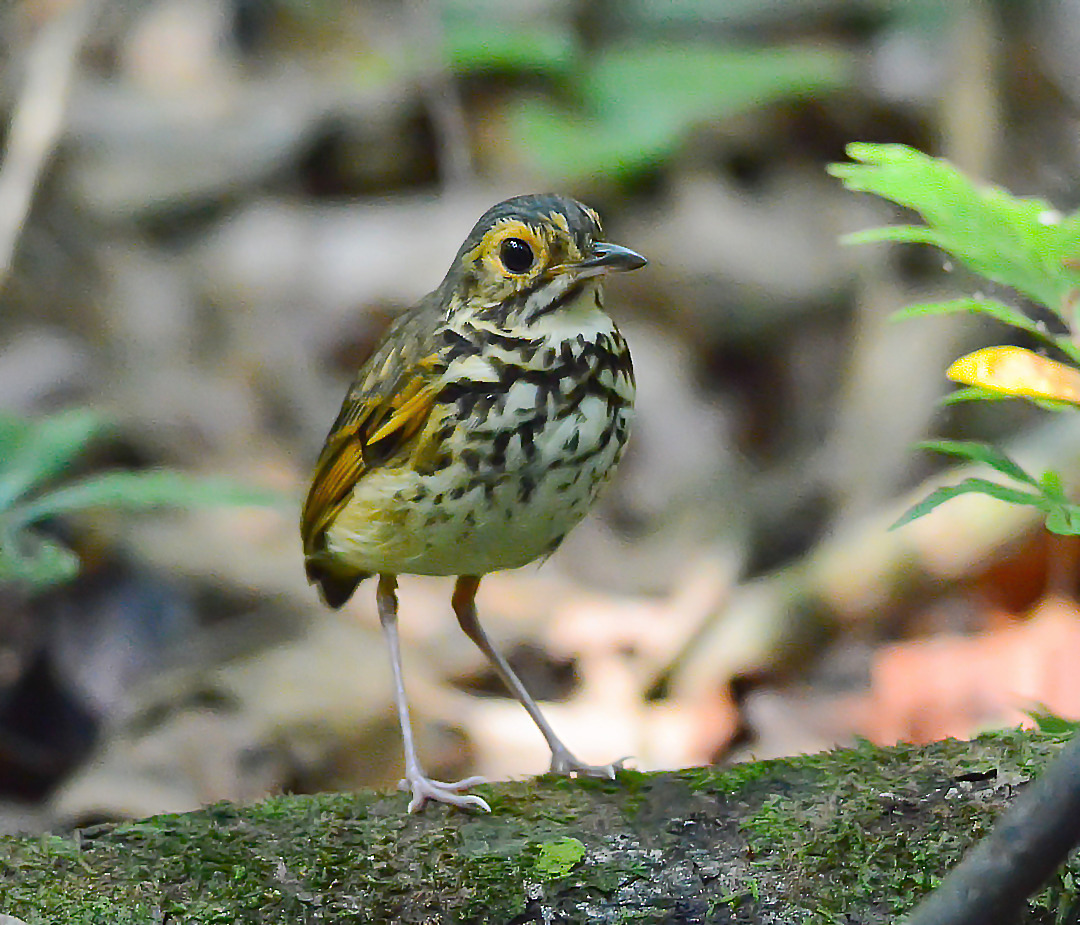
Nearly six hundred species. An endemic woodcreeper described to science only in 2002. A habitat called canga — stunted vegetation growing on exposed iron ore — that you will not find on any other birding tour in the world.
Serra dos Carajás, in southeastern Pará state, is one of those places that rewrites what you think you know about Amazonian birding. This is not flat, endless várzea forest. These are mountains — isolated peaks rising to around 800 metres above sea level, surrounded by dense terra firme, cut through with humid valleys choked with bamboo, and capped with iron outcrops where Cerrado specialists share space with Amazonian endemics. The result is a bird list that rivals any site in Brazil, and a collection of habitats unlike anything else in the Amazon basin.
Why Carajás
The Carajás National Forest (Floresta Nacional de Carajás) protects over 400,000 hectares of Amazon rainforest across a mountain range that sits at the boundary of two major interfluvial regions — the Xingu-Tocantins and Xingu-Tapajós. That biogeographic position, combined with dramatic altitudinal variation and the presence of the iron-rich canga habitat, creates a concentration of species diversity that few Amazonian sites can match.
BirdLife International designates Serra dos Carajás as a Key Biodiversity Area (KBA), recognising ten locally occurring rare species. The area between the Xingu and Tapajós rivers — the broader interfluvium that Carajás anchors — harbours eight bird species found nowhere else on the planet. For birders building an Amazon list, Carajás is not optional. It is one of the few sites where the eastern Amazon's deepest endemism is actually accessible.
The Habitats That Make Carajás Different
Canga — Iron Outcrops
This is what sets Carajás apart from every other Amazonian birding destination. Canga is a type of lateritic crust — exposed ironstone formations on the summits of the serra — that supports a dry, stunted, open vegetation more reminiscent of Cerrado than of the rainforest surrounding it. The result is an archipelago of open-country habitat sitting on top of unbroken Amazon forest.
On the canga, you find species that seem out of place in the Amazon. Cerrado specialists and open-country birds occupy these iron outcrops, while just below the ridge, dense humid forest holds an entirely different community. Walking from one habitat to the other takes minutes. The birding feels like crossing between biomes without changing elevation.
Terra Firme Forest
The lowland and foothill forests around the serra are classic eastern Amazonian terra firme — tall canopy, dense understorey, and the full cast of mixed-species flocks, army-ant followers, and canopy frugivores that define Amazonian birding. The forest here is mature and structurally complex, with huge emergent trees and a rich mid-storey.
Bamboo and Valley Forest
The humid valleys and foothills of the serra support dense bamboo stands — the habitat of some of the Amazon's most sought-after specialists. Bamboo-dependent species are notoriously habitat-specific, and the Carajás valleys provide reliable access to this microhabitat within a broader Amazonian landscape.
The Birds You Come Here to Find
Carajás Woodcreeper
The Carajás Woodcreeper (Xiphocolaptes carajaensis) was first collected in July 1985 during an expedition to forest inside the mining concession of Vale do Rio Doce, but was not formally described until 2002 by Cardoso da Silva, Novaes and Oren. At 30 centimetres and roughly 110 grams, it is a substantial bird with greenish-brown body plumage and chestnut wings and tail. It is restricted to the Carajás region and represents one of the clearest examples of differentiation across the Xingu River barrier — a biogeographic pattern that defines much of eastern Amazonia's avian endemism.
For birders, this is the signature species of Carajás. You cannot see it anywhere else.
Wing-banded Antbird
The Wing-banded Antbird (Myrmornis torquata) is one of the most wanted antbirds in the Neotropics — a terrestrial, army-ant-following species that is difficult to see across most of its range. Carajás National Forest is considered one of the more reliable sites to find it. The mature terra firme forest here provides the conditions this species requires: extensive, unbroken understorey with regular ant swarms.
Black-chested Tyrant
The Black-chested Tyrant (Taeniotriccus andrei) is a rare flycatcher that consistently ranks as one of the top target species on any Eastern Amazonia itinerary. Serra dos Carajás is one of the most reliable locations for it. It favours dense forest edges and vine tangles in the mid-storey — the kind of precise microhabitat that rewards local knowledge.
Dark-winged Trumpeter
Trumpeters (Psophia) are obligate terra firme forest birds, walking the forest floor in small groups, and their taxonomy is closely tied to Amazonia's river-barrier biogeography. The form found at Carajás — Psophia viridis dextralis, sometimes treated as part of the Dark-winged Trumpeter complex — belongs to the Xingu-Tocantins interfluvium and is treated by some authorities as a distinct species. Regardless of taxonomy, it is a key interfluvial target that cannot be seen on birding tours to western or central Amazonia.
Cotingas
The White-tailed Cotinga (Xipholena lamellipennis) is an uncommon and range-restricted species of the eastern Amazon canopy. Carajás is among the most reliable sites for this bird, which favours tall emergent trees in mature terra firme forest. Male birds — with their striking white plumage and modified wing feathers — are canopy-level targets that require patience and good light.
Bamboo Specialists
The bamboo thickets of the Carajás foothills hold species that are functionally impossible to find outside this habitat. The regional checklist includes bamboo-dependent taxa such as the Chestnut-throated Spinetail (Synallaxis cherriei) and the Black-and-white Tody-Flycatcher (Poecilotriccus capitalis) — small, skulking, voice-dependent birds that reward early mornings and sharp ears.
When to Go
Carajás sits in the eastern Amazon's equatorial climate zone, with temperatures averaging 21 to 22°C year-round and modest seasonal variation. The dry season — roughly June through October — offers the most comfortable birding conditions, with less rain, better trail access, and higher activity levels in mixed-species flocks. The canga outcrops are accessible year-round, but the forest trails benefit from drier conditions underfoot.
That said, the wet season (November through May) brings its own rewards: breeding activity increases, and some species — particularly cotingas and manakins — become more vocal and visible during courtship displays.
Getting There and Logistics
Carajás is accessed via Parauapebas, a city in southeastern Pará state that serves as the gateway to the national forest. Flights arrive from Belém or Marabá, with a short transfer to town. The proximity of the city to the forest means that birding begins quickly — there is no multi-day river journey to reach the field sites.
Thanks to the presence of mining infrastructure, road access within and around the national forest is unusually good for an Amazonian site. This is a practical advantage: you can reach multiple habitats by vehicle in a single day, covering canga, terra firme, bamboo and edge habitats without the logistical complexity of river-based expeditions.
Accommodation in Parauapebas is comfortable — the town has well-maintained hotels with air conditioning, reliable meals and proximity to the national forest entrance. Four to five full birding days are typically sufficient to cover the key habitats and target species, though deeper exploration of bamboo and understorey specialities can justify a longer stay.
Your Guide to Carajás
Anderson Sandro is a Pará-based birding guide with deep field knowledge of the Carajás region. His 4-day Carajás Expedition is built around the serra's core habitats — canga outcrops, terra firme, bamboo valleys — and targets the key species that make this site irreplaceable on an Amazon list: the Carajás Woodcreeper, Wing-banded Antbird, Black-chested Tyrant and the interfluvial endemics that no western Amazon tour can offer.
Four days is enough to cover the major habitats and primary targets. Anderson knows the microhabitats, the ant-swarm schedules, the bamboo patches where the spinetails call at dawn. That kind of local knowledge is what turns a good site into a great trip.
The Conservation Context
Carajás presents a conservation story that is not simple. The national forest was established in 1998, covering the serra and its surrounding lowlands, but the region's identity is inseparable from the Carajás mining complex — one of the largest iron ore operations in the world, operated by Vale. The forest and the mines coexist within the same landscape, and the conservation of endemic species like the Carajás Woodcreeper depends on the preservation of habitat fragments amid ongoing industrial activity.
The creation of the Parque Nacional dos Campos Ferruginos in 2017 added further protection to the canga habitats — the iron outcrops that support the region's most unusual ecological communities. These formations are globally rare and biologically irreplaceable. Every birding visit reinforces the economic case for keeping them intact.
For visiting birders, the practical implication is clear: Carajás is not wilderness in the way that the upper Juruá or Serra do Divisor might be. It is a place where conservation, industry and biodiversity intersect — and where the presence of birding tourism contributes to the argument that these forests are worth more standing than cleared.
Explore our Amazon expeditions
From the iron mountains of Carajás to the remote forests of Rondônia and Acre — find the Amazon expedition that matches your target list.
Browse expeditions →Plan Your Expedition
Nearly six hundred species. An endemic woodcreeper that exists nowhere else. A habitat — canga — that no other birding destination can offer. And road access that makes the logistics manageable in a region where logistics often are not.
Carajás belongs on the short list of essential Amazonian birding sites. It fills gaps that no other tour can fill, it adds interfluvial endemics that no other accessible site provides, and it does all of this in a compact, well-serviced area that does not require weeks of travel to reach.
Explore the Carajás Expedition with Anderson Sandro, browse our other Amazon expeditions, or get in touch to discuss building a custom itinerary that includes Carajás.